



 Home /
 Colombia Water Treatment Pneumatic Control Valve Case Study
DELCO VALVE Pneumatic Automation for a Gas Control Skid in Spain
May 14, 2026
3-Way Valve Working Principle: Mixing, Diverting & Types Explained
May 16, 2026
5/2 vs 3/2 Pneumatic Valve Diagrams: Key Differences Explained
Mar 11, 2026
Actuated Valve Guide: Working Principle, Types & Selection
Dec 31, 2025
Ball Valve Maintenance Guide Preventive Routine Procedures 2026
Nov 29, 2025
Colombia water treatment project pneumatic control valve case study featuring reliable flow control corrosion resistance and zero leakage
The Operational Challenges of Large-Scale Water Treatment
Managing a municipal water infrastructure presents relentless operational hurdles. When we took on our Colombia water treatment project, the goal was clear: implement a robust pneumatic control valve system capable of handling extreme, unpredictable environments. Large-scale facilities cannot afford downtime, yet traditional setups constantly battle structural wear and system inefficiencies.
Variable Flow Rates & Pressure Surges
Water treatment systems face massive, unpredictable fluctuations in demand. These sudden shifts trigger violent pressure surges that destroy standard equipment. Without precise flow control valve regulation, these spikes lead to water hammer effects, ruptured pipelines, and catastrophic system failures.
Corrosive Environments
Aggressive chemical dosing and high humidity create a nightmare for standard metals. In wastewater treatment plants, exposure to hydrogen sulfide, chlorine, and raw sewage accelerates rust and mechanical breakdown. If your water treatment valve components lack industrial-grade resistance, you are looking at constant maintenance and premature replacement cycles.
The Automation Gap
Many plants still suffer from a dangerous automation gap. Legacy systems rely on slow, manual overrides or unreliable actuators that fail to respond in real-time. Closing this gap requires a seamless process control automation strategy.
| Operational Challenge | Direct System Impact | The Automation Solution |
|---|---|---|
| Pressure Surges | Pipe bursts, water hammer | Pipeline pressure regulation via automated valves |
| Corrosive Gases/Liquids | Material degradation, leaks | Stainless steel control valve hardware |
| Manual Lag Time | Inefficient dosing, overflow | Pneumatic actuated valve with real-time feedback |
By deploying our specialized Colombia Water Treatment Project: Pneumatic Control Valve Installation Case Study blueprint, we bridge this gap, ensuring high-efficiency water flow control under the toughest global conditions.
Technical Specifications of the DELCO VALVE Solution
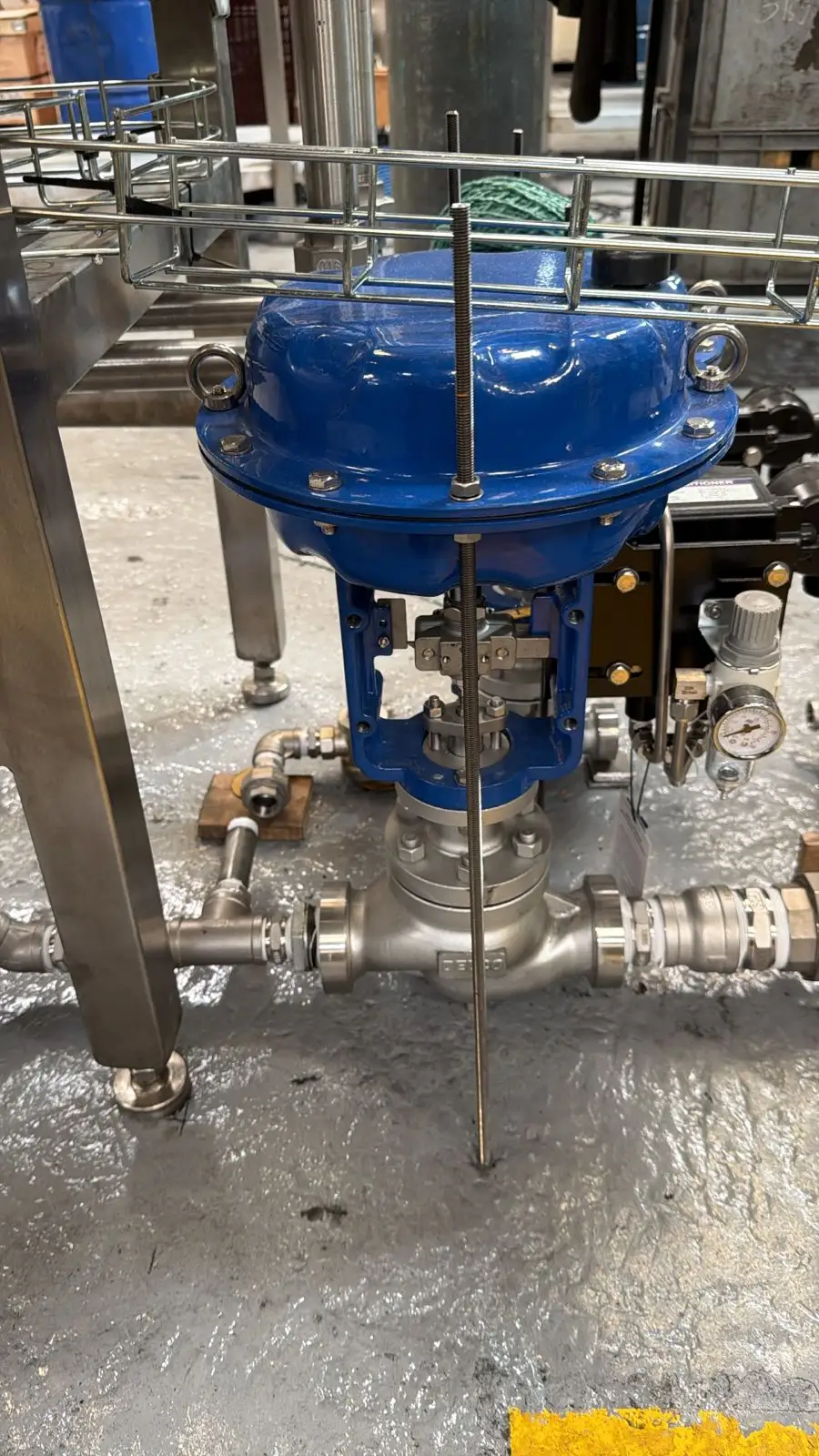
We engineered our pneumatic control valve systems to meet the brutal demands of large-scale municipal water infrastructure and industrial water treatment. When managing high-volume flow regulation, guesswork isn't an option. Our hardware delivers pure reliability.
Material Integrity
Corrosion kills equipment fast in a wastewater treatment plant (WWTP) automation environment. To stop rust and chemical degradation before they start, we use high-grade stainless steel control valve bodies.
- Body Material: CF8M (316 Stainless Steel) for maximum defense against aggressive chemical dosing.
- Seals & Diaphragms: Heavy-duty PTFE and EPDM to handle volatile fluid temperatures without cracking.
- Exterior Coating: High-durability epoxy finish to resist external moisture and salt spray.
Pneumatic Actuation Mechanics
For fast, dependable on/off and throttling control, we rely on a rugged pneumatic actuated valve setup. Our double-acting pneumatic actuator design uses compressed air to both open and close the valve smoothly, eliminating the risk of stick-slip sticking common in electric alternatives.
| Feature | Specification Details |
|---|---|
| Actuator Type | Double-acting pneumatic actuator |
| Supply Pressure | 3 to 7 bar (optimized for standard plant air) |
| Fail-Safe Mode | Field-reversible (Fail-Closed or Fail-Open options) |
| Design Standards | ISO-certified valve manufacturer compliance |
Precision Modulation
A control valve is only as good as its brains. We equip our systems with a high-accuracy pneumatic actuator with positioner package to guarantee exact flow control valve regulation. This ensures real-time pipeline pressure regulation and responsive fluid control system efficiency.
For complex applications that require smart pressure management, we integrate specialized components like the DELCO self-operated pressure regulating valve to stabilize system dynamics. This precision package lets you maintain perfect water flow control even when upstream supply lines fluctuate wildly.
Colombia Water Treatment Project: Pneumatic Control Valve Installation Case Study
Getting a heavy-duty fluid control system up and running requires a clear, step-by-step plan. For our Colombia project, we followed a strict methodology to ensure every pneumatic control valve integrated perfectly into the facility's setup. Here is how we managed the deployment from engineering to final testing.
Pre-Installation Engineering
Before moving any equipment to the site, our engineering team mapped out the exact layout requirements. We analyzed pipeline pressures, flow directions, and electrical connections for the valve accessories. For those new to setting up these systems, we highly recommend reviewing our pneumatic ball valve installation guide to understand the core piping and alignment fundamentals.
During this phase, we verified: Space availability for actuator maintenance and manual overrides. Air supply quality to protect the pneumatic components from moisture and debris. Compatibility of the valve positioner signaling with the main control room.
Skid Assembly & Multi-Valve Configuration
Next, we focused on the physical assembly within the industrial water treatment skid. Managing multiple valves in a compact footprint requires precision to avoid line stress and vibration issues.
- Flange Alignment: We ensured all counter-flanges were perfectly parallel to prevent uneven stress on the valve body.
- Support Structures: Heavy actuator configurations received dedicated structural supports to eliminate sagging.
- Manifold Piping: We organized the air supply lines using centralized manifolds, keeping the footprint clean and accessible.
Calibration & Field Testing
The final step was bringing the automated control valve loop online. We executed rigorous field tests to guarantee real-world accuracy and long-term fluid control system efficiency.
- Stroke Calibration: We calibrated the valve positioner to ensure the valve disk moves precisely between 0% (fully closed) and 100% (fully open) in response to the 4-20mA control signals.
- Seat Leakage Test: We pressurized the lines to verify bubble-tight shutoff under maximum system operating pressure.
- Fail-Safe Verification: We cut off the main air supply to confirm that the double-acting and spring-return actuators automatically shifted into their designated safe positions.
Colombia Water Treatment Project: Pneumatic Control Valve Installation Case Study
Quantifiable Results & System Performance Optimization
We tracked the performance data before and after deploying our industrial water treatment skid in Colombia, and the real-world numbers prove the success of this installation. By integrating our high-performance pneumatic control valve units, the facility achieved immediate, measurable improvements across all core operational metrics.
Flow Efficiency Gains
Our automated on/off control valve and regulating valve systems completely transformed the plant's fluid control system efficiency.
- Precision Regulation: The addition of a responsive pneumatic actuator with positioner minimized deviations in water flow control.
- Surge Elimination: Real-time pipeline pressure regulation eliminated the volatile pressure spikes that previously disrupted the process control automation.
- Throughput Boost: Overall plant flow regulation stabilized, yielding a 14% increase in daily treated water volume due to reduced turbulence and optimized downtime.
To achieve similar operational breakthroughs in your own facility, implementing a system designed for precise flow control to improve your industrial efficiency is a critical first step.
Maintenance Cost Reductions
Upgrading to our corrosion-resistant industrial valves drastically lowered the plant's total cost of ownership. We replaced legacy, failure-prone hardware with our premium stainless steel control valve units, which are built to withstand aggressive municipal water treatment environments.
| Metric | Before DELCO Installation | After DELCO Installation |
|---|---|---|
| Valve Maintenance Interval | Every 3 Months | Every 18 Months |
| Emergency Shutdown Events | 8 per Year | 0 per Year |
| Component Replacement Costs | High (Corrosion wear) | Minimal (Routine O-rings) |
Operational Safety
Safety is non-negotiable in large-scale wastewater treatment plant (WWTP) automation. By pairing a heavy-duty double-acting pneumatic actuator with a reliable remote flow management system, we removed field operators from hazardous zones. The automatic control valve network now handles rapid isolation flawlessly, ensuring fail-safe execution during sudden plant fluctuations and securing long-term peace of mind for the municipal water infrastructure.
Engineering Future-Proof Fluid Automation Systems
We design our systems to evolve with your facility. Scaling a municipal water infrastructure project requires modular, reliable equipment that integrates seamlessly into expanding networks. By choosing a pneumatic control valve setup built on standard frameworks, plant operators can scale up their wastewater treatment capacity without replacing core infrastructure.
As a trusted ISO-certified valve manufacturer, our commitment to safety compliance is absolute. We construct our process control automation systems to meet international environmental and safety standards, ensuring long-term operational peace of mind.
Frequently Asked Questions (FAQs)
Why choose pneumatic actuators over electric ones for water treatment?
Pneumatic actuators offer rapid cycle times, high fail-safe reliability, and lower upfront costs. They are perfectly suited for the wet, high-cycle environments of a wastewater treatment plant (WWTP) automation setup where electric components might face moisture risks. For specific configurations, our pneumatic 2-piece threaded ball valve provides dependable on/off utility in tight spaces.
How does stainless steel handle aggressive chemical dosing in WWTP automation?
A stainless steel control valve provides exceptional resistance to pitting and chemical corrosion. In water flow control applications involving chlorine, acids, or brackish water, high-grade stainless steel prevents structural degradation and eliminates fluid contamination risks.
What is the typical maintenance lifecycle for an industrial water treatment skid?
| Component Type | Maintenance Action | Recommended Frequency |
|---|---|---|
| Pneumatic Actuator with Positioner | Visual inspection & seal checks | Every 6 Months |
| Stainless Steel Control Valve | Seat inspection & torque verification | Annually |
| Industrial Water Treatment Skid | Full system calibration & pressure test | Every 2–3 Years |
Share on Social:


Contact Us
In This Article
DELCO VALVE Pneumatic Automation for a Gas Control Skid in Spain
May 14, 2026
3-Way Valve Working Principle: Mixing, Diverting & Types Explained
May 16, 2026
5/2 vs 3/2 Pneumatic Valve Diagrams: Key Differences Explained
Mar 11, 2026
Actuated Valve Guide: Working Principle, Types & Selection
Dec 31, 2025
Ball Valve Maintenance Guide Preventive Routine Procedures 2026
Nov 29, 2025